






Artificial Intelligence has always been relying on the cloud infrastructure where information is sent to the remote servers to be processed and analyzed. Although this method has facilitated the fast development of AI, it presents other limitations including latency, high cost of operation and security of data.
With the increased data-drivenness of businesses, they are now focusing on faster and more secure and cost-effective solutions. This has resulted in the emergence of offline AI where information is calculated locally on devices without necessarily having continuous access to the internet.
Also referred to as edge AI, offline AI is becoming popular in any industry as it is more aligned with the requirements of the modern business. Whether it is real-time decision-making or improved privacy, it has its benefits that cloud AI has failed to provide in a consistent manner.
What Is Offline AI
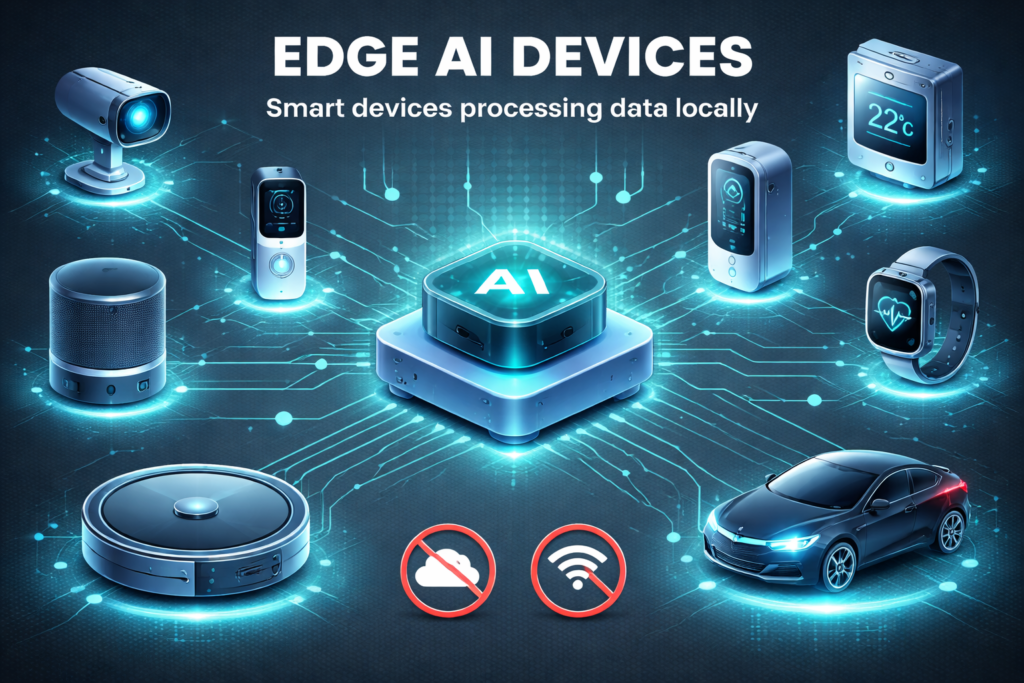
Offline AI is artificial intelligence systems that directly run on local devices including smartphones, Internet of Things, or an on-premises server. These systems do not send data to the cloud and instead process the information there.
This will enable companies to manage data in real-time and in a secure manner, without relying on the external servers. It is especially helpful in the situation when speed and reliability are important.
Offline AI minimizes the use of internet connection thus guaranteeing continuous operation. It also gives organizations more power over their data and AI models, which is getting more and more relevant in the modern regulatory environment.
Reasons to abandon cloud AI in Companies.
Information security and privacy.
Data security is one of the largest issues of cloud AI. The sensitive information should be moved and stored on other servers and this poses more risks of breach and unauthorized access.
Offline AI solves the problem by retaining data in local systems. This goes a long way in curbing cyber threats, as well as assisting companies to adhere to tough data security laws.
Since privacy is becoming a key focus of businesses and consumers, offline AI is a safer and more trustworthy and reliable alternative.
Reduced Latency and Higher Processing.
Cloud-based systems are very dependent on the speed of the internet and this may cause delays in data processing. A single delay can affect the performance or safety of critical applications.
This is solved by offline AI that processes data in real-time on the device. This is why it is best suited to automation, healthcare monitoring, and smart technologies, which demand real-time responses.
The capacity to provide instant information will be an added competitive edge to the business and will enhance efficiency.
Cost Efficiency
Operating a cloud AI would also require continuous costs, such as storage costs, bandwidth costs, and the cost of using the API. These costs may become relevant with time as the volume of data increases.
Offline AI eliminates reliance on cloud services whereby companies can lower their operational expenses. Even though the initial installation might involve spending on hardware, it is a cost-efficient option in the long term.
This is why more and more businesses that are interested in optimizing their budgets are adopting offline AI.
Reliability and Independence
Cloud AI systems are susceptible to internet outages and server downtime, which may cause an inconvenience in the operations. This is particularly an issue in such industries that demand continuous performance.
Offline AI is not limited to network connectivity and guarantees steady and steady performance. It enables organisations to operate efficiently even where there are remote or volatile locations.
Such reliability makes offline artificial intelligence a favourable option when it comes to mission-critical applications.
Customization and Control
Cloud AI solutions can be standardized and do not necessarily address the needs of particular businesses. Customization may be constrained and reliant on third party suppliers.
Offline AI places full control of its models and data in the hands of the organization. This will enable them to customize AI systems to their workflows and needs.
The increased control results in the enhanced performance, the enhanced accuracy, and the increased relevancy of the outcomes to the businesses.
The most important advantages of Offline AI.
- Increased privacy of the data and storing it in local systems.
- Minimal or no latency real-time processing.
- Lowered the long-term cost through reducing cloud dependency.
- Better reliability with no interruption of the internet or servers.
- More personalization and AI model control.
The offline AI is being adopted by industries.
Healthcare
Offline AI in healthcare allows the safe processing of data about patients in local devices. This enhances privacy and gives real-time monitoring and quicker medical decision making which becomes important in cases of emergency.
Automotive
Automobile manufacturers are dependent on offline AI to drive cars and intelligent vehicles. Safety and performance is improved by real-time decision-making without delays in the network.
Manufacturing
Offline AI is employed in manufacturing units in predictive maintenance and quality control. It aids in the identification of problems in real-time, saving time and enhancing the cost-efficiency of operations.
Issues of Offline AI.
Offline AI has some weaknesses despite its strengths. Cloud servers can be limited with complex processing issues due to the fact that the local devices might not match the computational power of the cloud servers.
Also, it may not be easy to update AI models in various devices. The other expenses that companies have to make during the initial setup phase are specialized hardware.
Nevertheless, the development of AI chips and edge computing hardware is slowly alleviating these issues and offline AI is becoming more available and scalable.
The Future of AI in the offline world.

It is believed that the future of AI will be a hybrid of the cloud and offline system. Although cloud AI will still be used to process large volumes of data, offline AI will be used to dominate the field that needs speed, privacy and reliability.
The offline AI is further being adopted by new technologies like IoT and smart devices. With increased power of hardware, offline AI capabilities will keep growing.
The early adopters of this technology will be in a better position to be innovative and remain competitive in a fast changing digital world.
Conclusion
Offline AI is not only a trend but a business strategy change that aims to adopt artificial intelligence. As data privacy issues become more prominent, and the cost of cloud computing is increasing, and companies are moving to real-time performance, they are shifting more to local AI processing.
Although cloud AI is not altogether obsolete, offline AI is a better and more productive solution to numerous contemporary applications. With the further development of technology, the introduction of offline AI will only become faster and determine the future of intelligent systems in various industries.
FAQs
1. What is offline AI?
Offline AI is a system, according to which the processing of data is performed on the devices rather than on the servers in the cloud since it allows operation faster and more safely.
2. What is the reason why firms are moving to offline AI?
Offline AI is being implemented by companies in pursuit of enhanced privacy, lower costs, expediency and lack of reliance on internet connection.
3. Is AIs offline superior to AIs cloud?
Offline AI has an advantage over speed and security whereas cloud AI is more appropriate in the large scale data processing.
4. Does AI offline need the internet?
No, offline AI does not require the continuous use of the internet, so it can be used in remote and real-time.
5. What is the future of offline AI?
The Offline AI will further develop as edge devices are enhanced, and it is probable that it will be used in hybrid systems with cloud AI.