

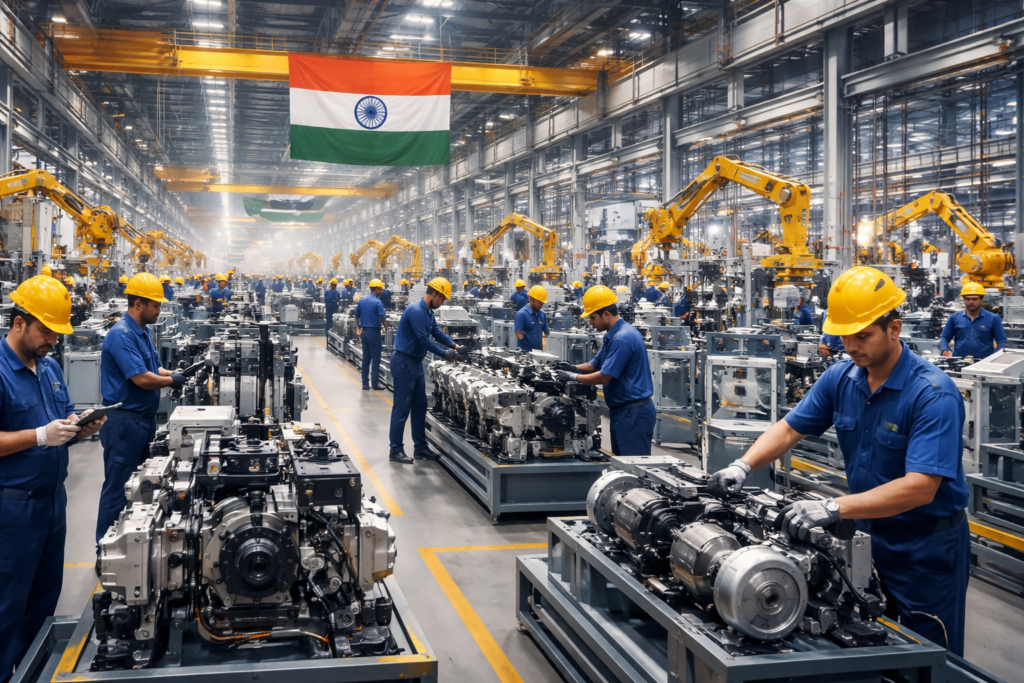

India is also at a new stage of industrial development as the flagship project is being transformed into Make in India 2.0. The program, which was initially introduced in 2014, is currently more extensive, ambitious, and globally relevant. With the changing nature of global supply chains and countries seeking secure manufacturing partners, India is increasingly becoming a significant player. It is not only the domestic economy that is being boosted by this transformation but also changing the way international trade moves around the regions.
What is Make in India 2.0?
Make in India 2.0 is a more targeted and implementation-focused approach to the initial project. It focuses on innovation, high-value production, export preparedness and integration in global supply chains. The government is not just promoting investment, but also establishing systems that guarantee growth in manufacturing in the long run.
Key Focus Areas
- Electronics and semiconductors
- Carmotile and electric cars.
- Medical devices and pharmaceuticals.
- Textiles and apparel
- Defense manufacturing
This change underscores the desire of India to emerge as a manufacturing powerhouse, rather than a low-cost production hub.
Growth From Policy Reforms.
The policy environment in India is increasingly contributing towards enhancing manufacturing capacity and encouraging investment in the country.
- PLI schemes that increase production and exports.
- Business efficiency with a simplified tax system with GST.
- Quicker approvals through digital governance and one-room approvals.
- Liberalization of Foreign Direct Investment (FDI) in various sectors.
- Intense emphasis on industrial corridors and logistic infrastructure.
Production Linked Incentive (PLI) Scheme.
The PLI scheme has become a game changer in that it directly incentivizes companies in increasing production in India. This model of performance based incentive has prompted the domestic and international manufacturers to intensify activities particularly in areas such as electronics and pharmaceuticals. This has increased the level of exports and manufacturing capacity in India, thus increasing its competitiveness in the world.
Ease of Doing Business.
India’s business environment has seen considerable improvement, particularly through the simplification of rules and the easing of red tape. The digitization of processes, quicker approvals, and clearer policies have bolstered investor confidence. As a result, companies are now operating more efficiently, and the time needed to set up and manage manufacturing ventures has decreased.
Infrastructure Development
The government is also putting a lot of funds in the infrastructure to enable growth in manufacturing. Industrial corridors, smart cities, highways, port modernization and other projects are enhancing connectivity and lowering logistics expenses. It makes the ecosystem of supply chain more efficient and India becomes more attractive to the manufacturers of the world.
Effect on International Trade.
The emergence of manufacturing in India is also affecting the world trade patterns as companies reorganize their supply chain strategies.
- Multinational companies adopt the China+1 strategy.
- Sharing higher share of India in world exports.
- Diversification of trade agreements with various countries.
- Global supply chain diversification towards India.
- Increased demand for high value Indian goods.
China+1 Strategy
The use of the China+1 strategy by global companies to avoid relying on one manufacturing hub is becoming popular. This change is benefiting India because of the large workforce, infrastructure enhancement and enabling policies. The trend is attracting a lot of foreign investment in the country and increasing its contribution in the global production networks.
Export Growth
Strong export growth is being experienced in India in the electronics, pharmaceuticals and engineering goods sectors. The increment in smartphone production and exports of pharmaceutical products has specifically boosted the global trade of India. This expansion is assisting India in emerging as a trusted provider in the global markets.
Strategic Trade Partnerships.
India is also actively concluding trade agreements with other nations to increase their access to the market and lower tariffs. Such collaborations are exposing Indian manufacturers to new opportunities, and making them more competitive in international markets. With the decline of trade barriers, Indian products are becoming more acceptable all over the world.
Sector-Wise Transformation
Electronics Manufacturing
India has become a huge electronic manufacturing center particularly in smartphones. The country is attracting global tech companies to establish production plants with government incentives and with a developing domestic market. This industry is not only increasing its exports but also generating massive jobs.
Auto and EV Industry.
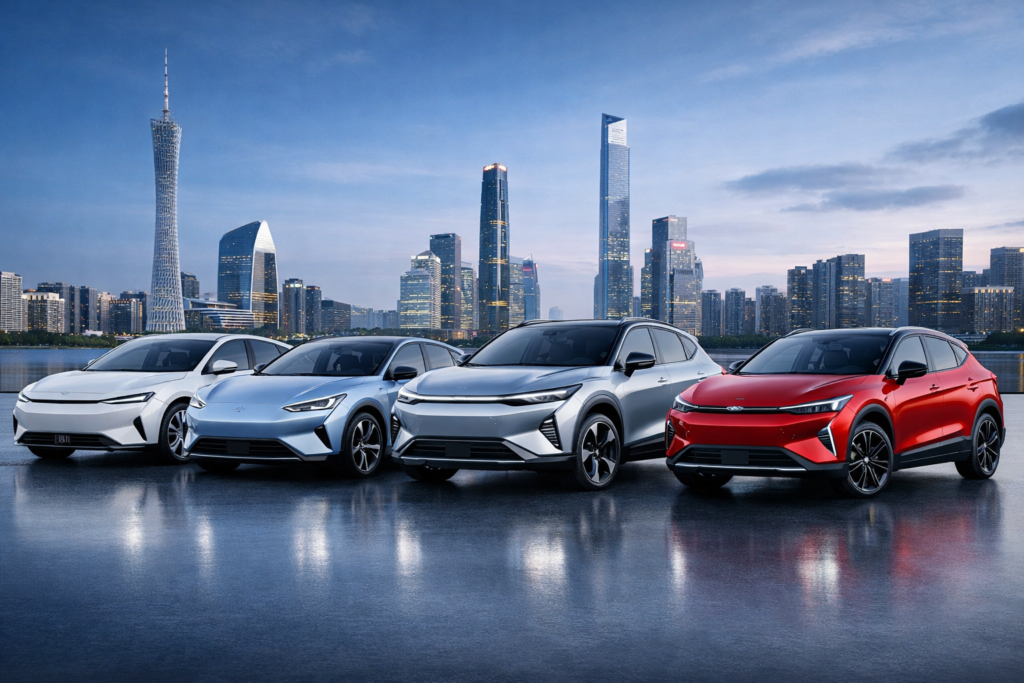
The automotive industry is also experiencing a shift with a big push towards electric cars. This change is occurring because of government incentives, increased environmental awareness and battery technology investments. In the next several years, India strives to become one of the leaders in the production of EVs.
Defense Production
India is working towards the elimination of reliance on imported defence products by enhancing local production. More investments, involvement of the private sector and export opportunities are aiding the development of an independent defense ecosystem. This is also a step towards making India an aspiring exporter of defense equipment.
Future Outlook
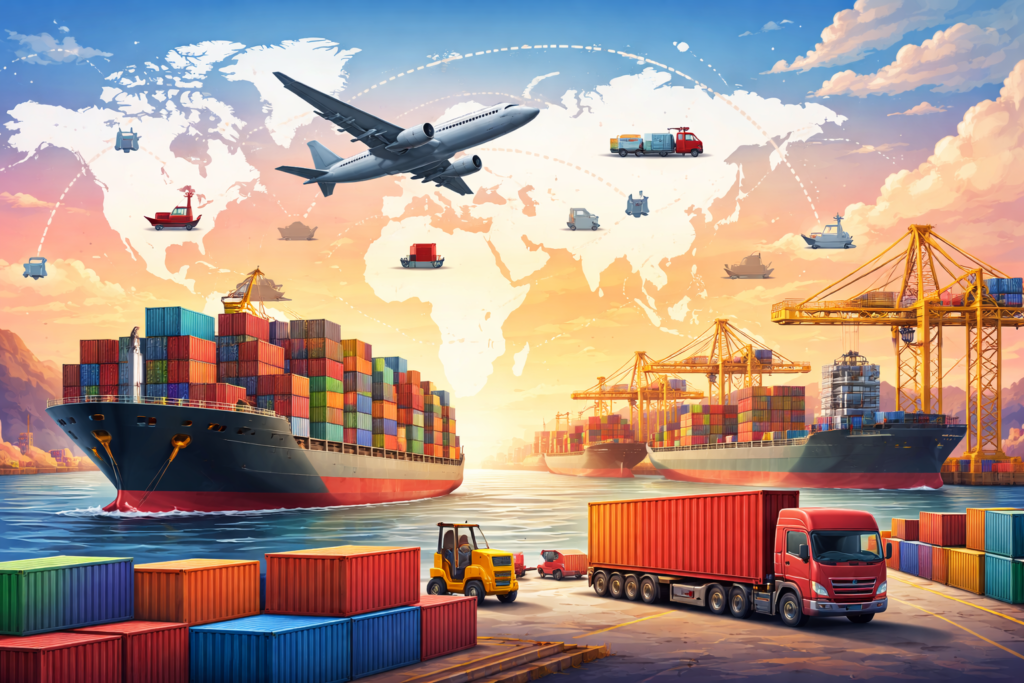
The manufacturing industry in India is poised to grow tremendously in the near future. All these factors are shifting the country towards a global manufacturing hub with government support, growing investments, and emphasis on innovation. The further success of Make in India 2.0 will be determined by the effectiveness of India in overcoming its challenges and sustaining the growth momentum.
Conclusion.
Make in India 2.0 is a change in how India views the economy; currently, it is service-oriented, but a shift to a balanced economy with an emphasis on manufacturing power is needed. India is also gradually becoming a major participant in international trade by enhancing infrastructure, streamlining its policies and becoming a participant of global supply networks. The situation still has challenges, but overall, the trend is in the right direction, and the initiative can transform the role of India in the global economy well beyond decades.
Frequently Asked Questions (FAQs).
Q1: What is Make in India 2.0?
Make in India 2.0 is a progressive stage of the manufacturing program in India in terms of high-tech industries, exports and global supply chain integration.
Q2: What is the benefit of global supply chain shifts in India?
India is enticing businesses to diversify their production beyond China, increasing investment and employment.
Q3: What industries are expanding the most?
The fast growth is observed in electronics, pharmaceuticals, automotive (with a particular focus on EVs), and defense manufacturing.
Q4: What is the role of the PLI scheme?
The PLI scheme encourages companies to produce more to facilitate exports and domestic production.
Q5: What do you consider the largest challenges that the manufacturing industry in India faces?
The main issues are the lack of skills, inadequate infrastructure, regulatory burden and competition with other emerging economies.