

AI has become a crucial aspect in today’s groundbreaking game development, driving the industry’s quick evolution. The creation of episode structures, AI-generated NPCHs, and unforeseen open worlds are adding to a more immersive and realistic experience, making for an unparalleled gaming experience.The implementation of AI-generated NPCHs, adaptive storytelling frameworks, and open-ended environments allows for experiences that are more immersive and realistic than ever before. As opposed to conventional games that feature the same dialogues and missions, the AI-based games can modify immediately based on the player’s choices. This change is affecting the interactions players can have with characters, the worlds they wander through and the narratives that they will experience.
What Are AI-Generated NPCs?
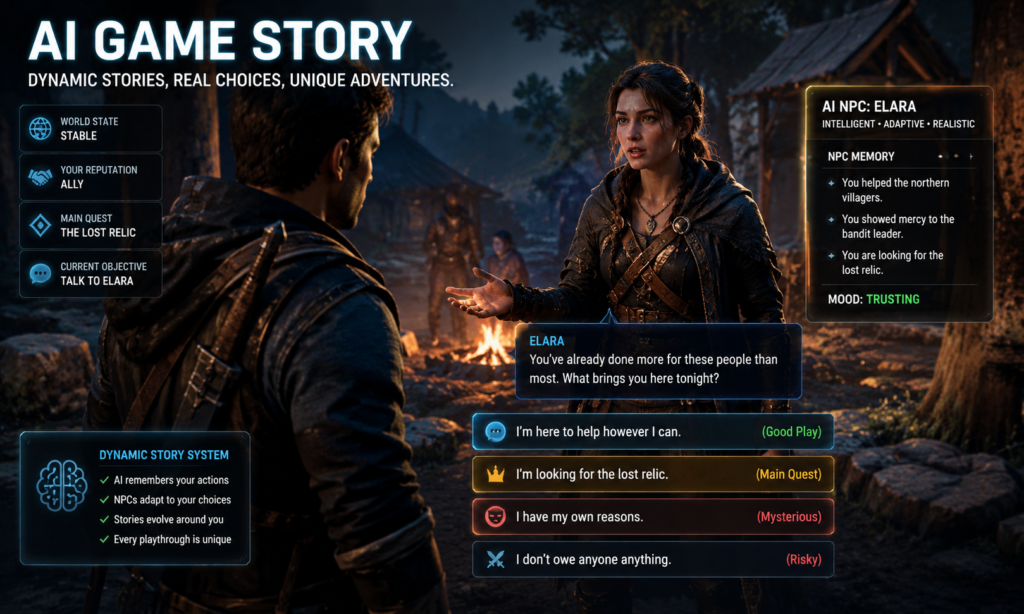
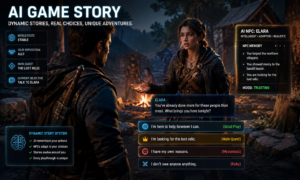
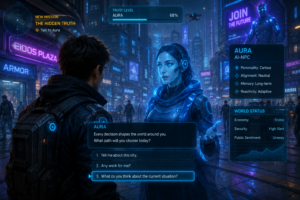
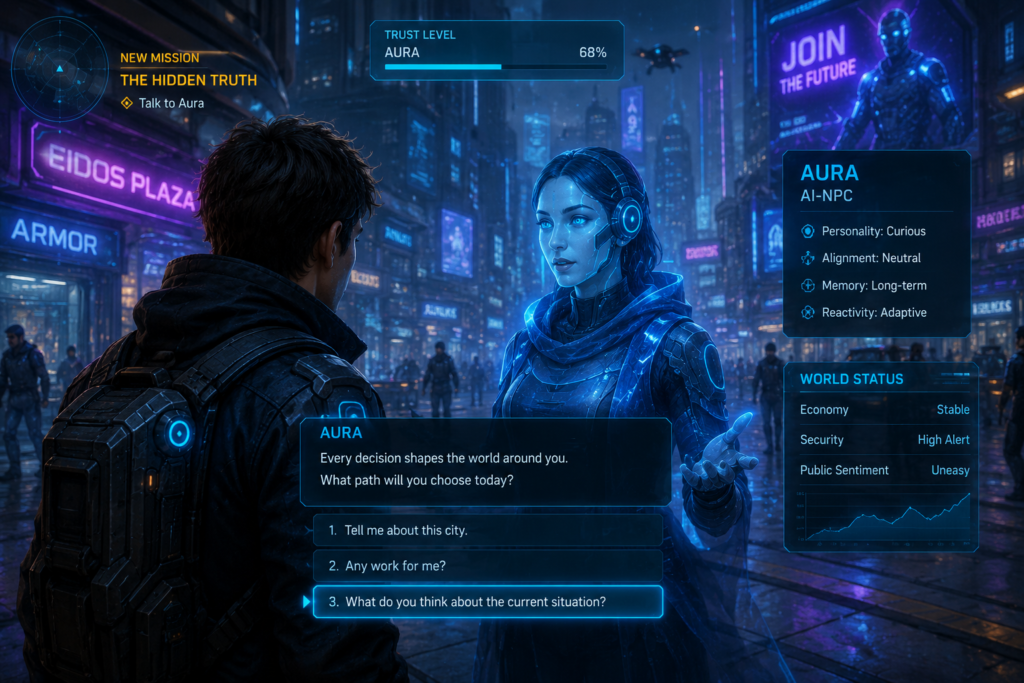
AI generated NPCs are non-player characters as opposed to the conventional approach of programming character behaviors.AI generated NPCs are non-player characters enabled by cutting-edge artificial intelligence systems rather than using conventional programmatic methods. These NPCs are capable of natural communication, just as they can change their behavior based on player actions, and also can create unique actions during the gameplay. They are able to learn and adapt into the games, making them much more interesting and unpredictive.
suffit chat during matches
AI-generated NPCs can have conversations with dynamic human-like or less repetitive conversations. These characters are free to answer questions in a variety of ways depending on what they do, relate to or choose in the game. This will help players to enter into the environment and feel emotionally attached to it.
Adaptive Emotional Responses
Emotions can be controlled via a modern AI system such that with the current AI, NPCs can react emotionally according to the situation. How the players behave while playing, determines the characters’ levels of friendliness, aggressiveness, fear and support. There are emotional responses that are more realistic during interactions and which can help to create realistic storytelling experiences.
Personalized Player Interactions.
Vice Versa: AI NPCs can learn from previous player choices and adapt to dealing with them accordingly. With example: sometimes if you aid a character early on in the game you will unlock special missions later on: betraying a character might change position permanently. This customisation allows each player to have a unique experience.
The mission generation is done dynamically.
AI systems may be used to dynamically create missions, rather than just relying on missions created by developers. NPCs can have side quests, goals, and/or challenges to accommodate events in the world as it unfolds and player progression. This will help to shock the player and provide a lot of replay.
Using smarter enemy behavior.
When players engage in battle, AI enemies can analyze and react intelligently to players’ strategies.During battle, AI enemies can take on the ability to intelligently analyze and react to the strategies used by players. They can change their strategies, team up with the opponents and make it more challenging for the opponent to fight them. This enriches the gameplay experience for them and makes it more competitive and realistic.
The Evolution of Dynamic Storytelling in Gaming.
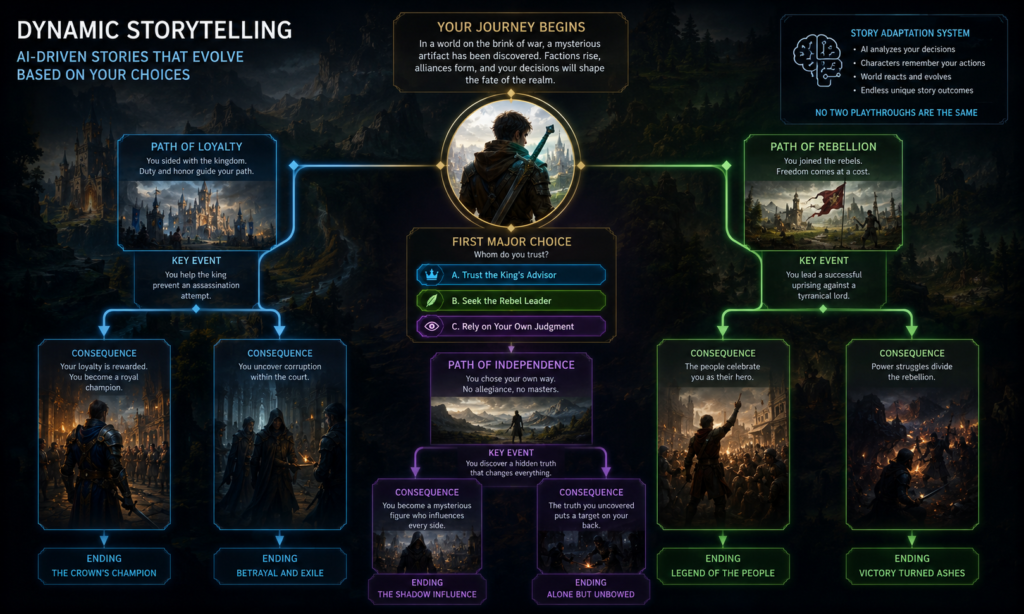
Dynamic storytelling is shaping the storytelling by giving its stories a fluid character, depending on what players choose to do and also experience in the game. The AI systems do not play a specific game play path, but change events, character relationships and outcomes during the gameplay. This will generate highly interactive experiences with each decision having a significant impact.
Player Choice impacts the narrative.
In gameplay with an AI, a player’s choices may make a complete difference to the game’s narrative. Choosing to leave camp for an alternate mission, saving a character, or not disagreeing with an important one can have significantly different repercussions in the future. This makes branching stories which will make players repeat the games a number of instances.
Evolving Game Worlds
Dynamic story telling systems enable the world of the game to constantly develop. The cities can be altered during war, the economy can fall apart and the environment can alter according to the players’ actions. While these changing worlds don’t seem to be as vibrant or alive as others, they appear more realistic.
Procedural Story Generation
Using AI technology, the stories can be generated in the game automatically to create uniqueness. AI can be used to generate random encounters, dialog, situations and narrative, as opposed to manually writing out each of these elements for the game. This will allow players to be placed into different adventures re-playing the story.
Better Character Development
AI’s ability to tell stories adds depth to characters by developing their relationship and personalities during a period of time. Depending on the way players play out interactions with characters throughout the game, they may gain trust, compete or fall emotionally in love with them.
Increased Replayability
With dynamic stories, players are given options and are urged to try out different asides or even replaying the game. All of the playthroughs can include fresh missions, other interactions and a completion of different endings, adding to the continuous worth of a sport.
Rise of Unscripted Open Worlds
One of the most interesting and exciting features of the gaming industry these days is the unscripted gaming environment and depiction. These worlds are powered by AI systems driven processes: the events, interactions and the changes of the worlds are dynamic, not just developed by the developer, and can be tweaked by users of the system.
Living Virtual Ecosystems
AI can generate accurate ecology environments for the running of wildlife, weather systems and a community that exists without humans. More enveloping worlds can be created through change of environments and animal migrations as well as the natural growth of cities.
World events for randomizing.
Unscripted worlds have events which are played out as the characters naturally interact with each other during the game and make new contacts with other characters. This subject imparts a randomness to the game and increases players’ enjoyment and excitement when exploring.
Dynamic Multiplayer Experiences
Multiplayer games can be created with AI systems and become dynamic systems where world events happen even when players are not playing. This is to give life-like worlds in the Web, which change continuously.
Freedom for Players
Unscripted Play:-Type of play where off-mission scenarios are created by players rather than having to adhere to a predetermined mission structure. This provides players with freedom, more creativity and the opportunity to play at their own speed.
Infinite Exploration Opportunities
Repeatedly any landscape, missions and encounters can be created using a procedural generation and AI systems. This allows for players to almost explore the world to their heart’s content within vast open worlds.
Conclusion
This is how NPCs, dynamic storylines, and unforpredictable basis for the game world created by artificial intelligence are transforming the future of games. AI is revolutionizing e-scapes and enhancing the capabilities of characters, narratives and worlds. They are now demanding more realistic gameplay, meshing with the side effects to actions, and a replayable experience, with customisable adventure events.
FAQs
1. In the world of video games, what exactly are the game’s NPCs?
AI NPCs are virtual characters created using artificial intelligence that can help you turn in dynamic, real-world responses and have a dialogue with players.AI NPCs stand for virtual characters that are powered by AI and can give players a dynamic, real-world response and talk with them.
2. What do you think is the implementation of dynamic storytelling in games?
Dynamic story: The story of the game evolves as a result of decisions, actions and interactions of the player during the game.
3. What would you like them to be called?So, what would you like them to be called?
AI-generated game worlds are game worlds generated in a manner similar to that of a scripted game but with unscripted interactions and events occurring in a “natural” manner.
4. How will AI NPCs be valuable in present day games?
Engaging user interactions for enhanced Immersion, Realism, Replay and Player Engagement.
5. So, what can you expect to see in future with AI in gaming?
Authentic environments, emotional non-player characters (NPCs) and individualized story experiences could be included in the future AI world of gaming.