


AI has revolutionized the gaming industry with a dramatically evolving landscape and changing interaction methods and experiences with the virtual world. Old style missions and goals were once based on scripted quests, repetitive goals, and predetermined character dialogues. Nowadays though, users come to expect to experience things that are immersive, with stories adapting to their decisions and actions.
Today, artificial intelligence has influenced the game development of NPCs and dynamic story worlds, making them more real with memorable characters and unique stories. Players will no longer primarily follow map markers and repeat the same missions, they will get a unique experience in a more natural and unpredictable adventure.
The End of Traditional Quest Systems
For years, game makers have been using quests that each player has to endure, without allowing for any variation or customization. This genre was successfully applied in older games, but nowadays audiences are looking for more freedom and interaction in games. Using AI technology, missions will dynamically change in a world that can be populated and will respond to player decisions.
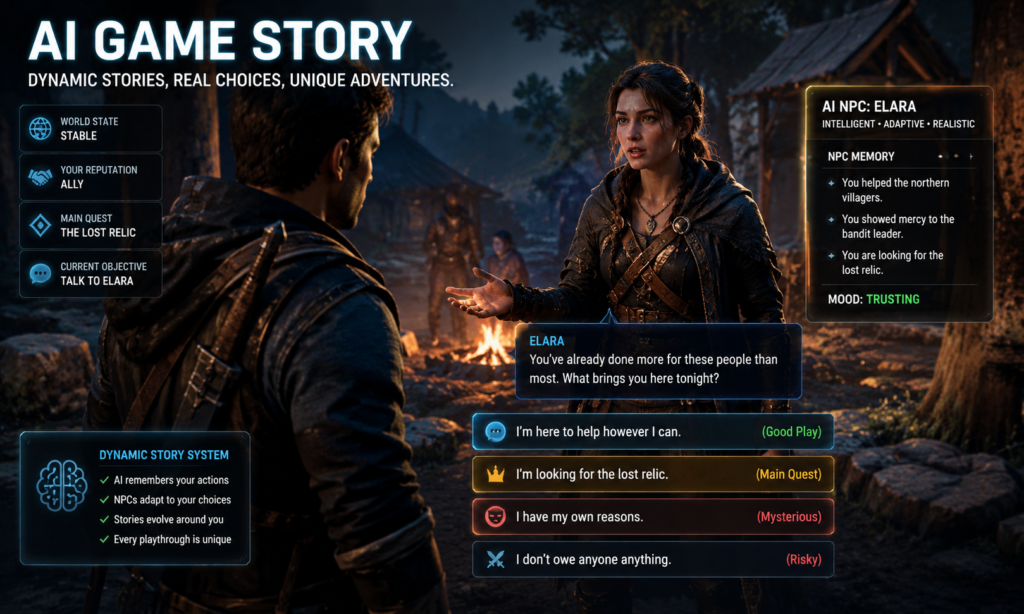
Traditional “quests” were usually thin on emotion as the NPC intervening with the players had a set script and said the same thing every time. Modern AI characters eliminate this issue because they are capable of performing actions upon their memories, being emotional, and affecting the outcomes of future actions within stories in a realistic way.
There are some well-known issues with conventional quests.
- Repetitive mission structures
- Limited dialogue options
- Predictable story outcomes
- Minimal player influence
- Lack of emotional realism
The Impact of AI NPCs on Today’s Games
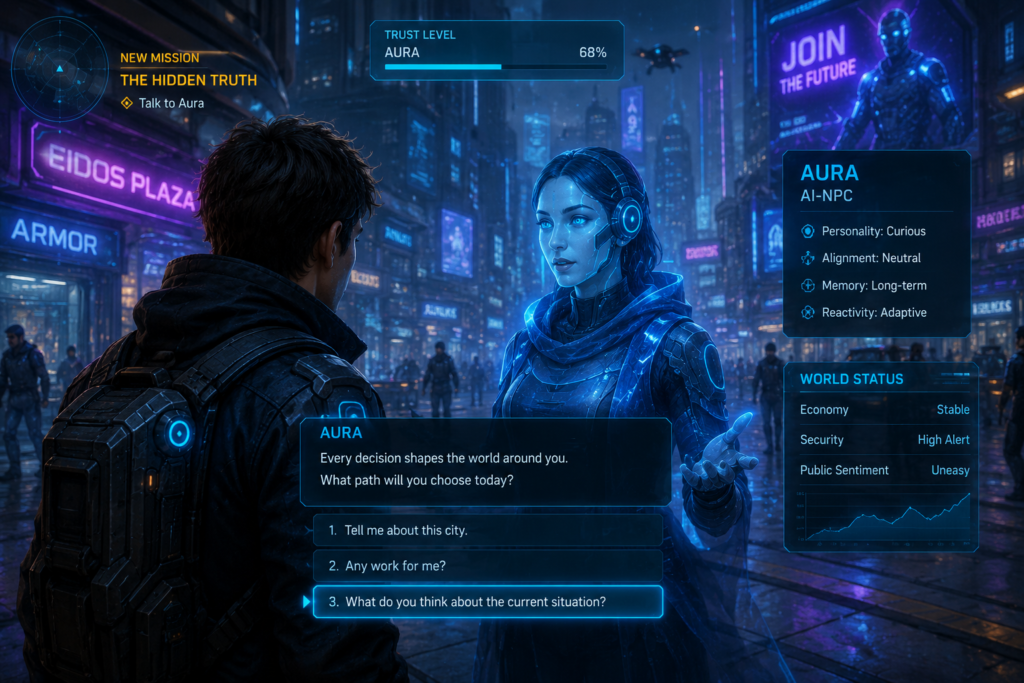
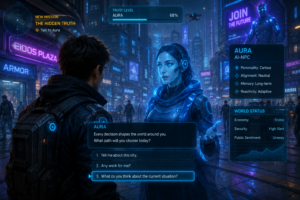
AI NPCs are quickly turning into among the most game-changing technologies in the gaming industry. Unlike human NPCs with pre-written dialogs, on-demand AI NPCs will have the ability to speak with players in a fluent and intelligent manner, understand the player’s actions, and behave differently each time.
Such smart characters give better authentic and interactive gameplay. These no longer serve as a source of quests, but are in on the action of the game’s changing story. Conversations and reactions seem more natural and/or human-like which adds to the player’s favourite character.
Major Advantages of AI NPCs
- Realistic player conversations
- Dynamic emotional reactions
- Personalized side missions
- Adaptive combat behavior
- Smarter companion support
Realistic Conversations in AI Games
In today’s era, one of the most amazing enhancements has been the capacity of an artificial intelligence NPC to sculpt contextually appropriate discussion.Among all the greatest enhancements in modern video gaming, the generation of contextually suitable dialogue by the AI NPCs has proven to be among the most astounding. In earlier games it was more a situation whereby the player would be given a set of pre-determined options to choose from. Thanks to the advances in AI, characters can now react in a more human-like manner according to their past interactions and player choices.
This engenders more immersion by playing with a more simulated character, not the scripted component. NPCs have the ability to know what they did in this story’s past, and can change their opinions while the story plays out, and will even act differently based on how moral or reputable a player is in the game world.
Smarter AI Character Behavior
The contemporary AI NPCs are not only more communicative but also much smarter against which they can play the game. They can now adapt to the player’s tactic, instead of attacking in a predictable manner. Peaceful allies can help plan moves, be familiar with player tendencies etc and can make autonomous choices when missions are played.
This makes for more interesting play as every encounter isn’t quite formulaic, instead it’s more dynamic. While creating the gameplay, it was important to consider the fact that players would have to constantly adjust their own personal strategy as AI players would change during the course of the playthrough.
Dynamic Storytelling Is Becoming the Future of Gaming
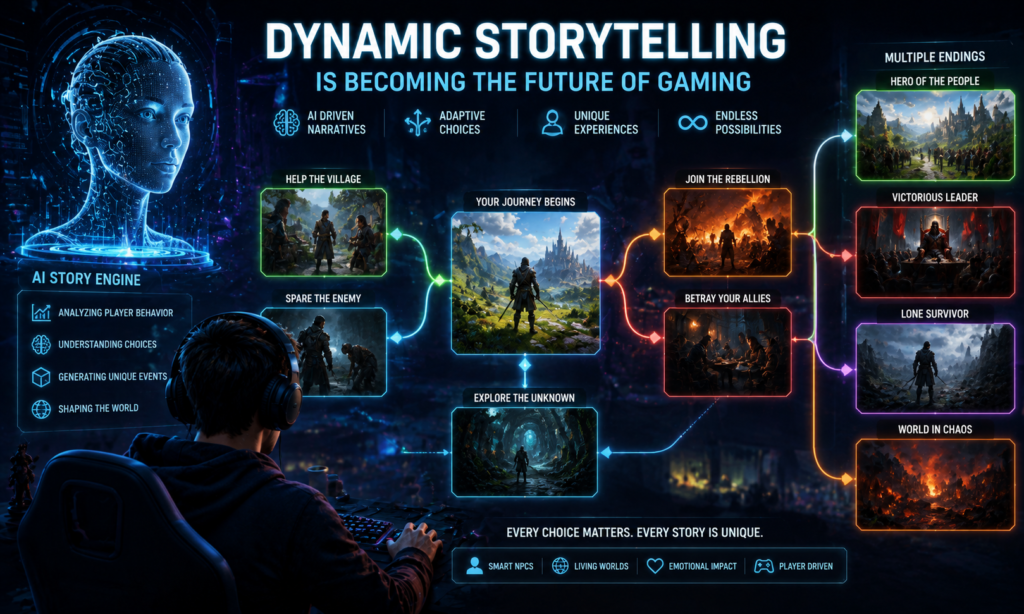
Dynamic storytelling enables games to develop storylines throughout their play rather than having set scenarios. The analytical capabilities of AI systems can help to create different experiences for every player based on their behavior, ethics and playing style.
Each player doesn’t always have to follow a particular journey; progress is independent of one another, allowing for unlocking of other missions, relationships, endings and world events. As a result, this-level of personalization generation adds to the replay value as well as the emotional investment.
Personalized Story Experiences
The game features an intelligent storyline: the story you can play is prepared for you by AI, but with the ability to change. A diplomatic player could find himself encountering peace deals and missions based on diplomacy, an aggressive player could see an outbreak of wars, betrayals or big conflicts.
The range of customisation options take every trip on a personal journey. The player’s emotions are involved since it is based on the player’s choices and actions within the game-world.
Why Gamers Prefer AI-Driven Worlds
Today’s players are looking for realistic and unpredictable games that provide them with an immersive experience. There isn’t anything quite like a world created by AI.AI-created worlds offer greater emotional engagement in that no two journeys will be the same.
The challenging journeys of old quests were sometimes monotonous following extended playing time. In dynamic, it is this aspect that is addressed, where new scenarios, adaption of dialogue, and changes in the world events are being created continuously.
Challenges of AI Storytelling in Games
While there are many wonders about AI technology, there are also a number of hurdles to advanced systems of storytelling being put into practice.
Ensuring that narrative quality is maintained.
There is occasional lack of emotional consistency, storytelling depth from the AI generated content. They need to be aware of the need to create a balance between procedural and human written stories, to ensure good emotional relationships.
Essential technical and development issues.
In order to develop advanced AI systems, you need a lot of testing and testing budgets, in addition to the hardware power. While larger studios might find great promise in complicated AI storytelling solutions, they might not be as effective for smaller studios.
Conclusion
The future of gaming is here, and AI NPCs and dynamic narratives are the driving force behind it, offering an escape from predictable quests to a more engaging and interactive player-driven experience. Today’s gamers demand authentic interactions, dynamic storylines, and story-driven environments that dynamically change around them as per their inputs.
With the ongoing development of AI technology, future games will continue to offer all these and more in a more interactive, emotional and customized experience. Going forward, the strategy of featuring AI-driven storytelling will continue to influence the gaming industry, making it a pivotal moment in the history of games.
FAQs
1. So, what are AI NPCs, and how can they enrich the gaming experience?
Non-Playable Characters that are powered by AI, react, have the ability to communicate and adapt in real-time based on player action.
2. What type of story form and function exist in games?
Dynamic stories employ AI systems to adjust stories, missions and character interactions according to the choices made by the player and their gameplay habits.
3. What is a reason for the change of popularity of the traditional quest?
AI systems offer more immersive and personalization than traditional quests, which sometimes can be repetitive and predictable.
4. Is there ever any chance that AI can replace human-sports writers entirely?
No, AI is largely being employed to augment the story and gameplay aspects, but human writers are still responsible for the core story and emotional aspects.
5. What are the kinds of games that can be best suited with AI storytelling?
Adaptive storytelling systems are best suited for open-world RPGs as well as adventure and survival games, in addition to simulation games.