




In 2026, AI will never be used in digital conversations or automation on the back-end. It has developed into an agentic AI, whereby systems are able to plan, make decisions and take action on the real world independently. This change is one of the biggest changes in technology– a transition of being assisted to self-sufficient.
Now agentic AI has become pervasive across industries, and is being used to power robots, to control systems, and even to make decisions previously deemed to be made by humans. Subsequently, there is a fast fading boundary between digital intelligence and physical reality.
What Is Agentic AI?
Agentic AI are intelligent systems capable of functioning independently to attain specific objectives, without having to be under human supervision. These systems are a combination of reasoning, memory and execution that enable them to work effectively in complex environments.
The most important features of Agentic AI.
Autonomy
The agentic systems of AI can work autonomously, analyze all real-time data and make decisions without the participation of a human. This is what makes them suitable to operate in dynamic and unpredictable systems like supply chain and emergency response systems.
Goal-Oriented Behavior
These systems are developed with precise goals in mind. It can be optimization of delivery routes, energy usage management, and agentic AI is aimed at measurable results that are achieved in an efficient way.
Adaptability
Against agentic AI is the characteristic of adaptability. These systems are able to learn out of the past experiences, change strategies and react to new challenges without manual reprogramming.
Multi-Step Reasoning
The agentic AI is capable of solving more intricate problems into smaller ones, considering a variety of options and implementing solutions step by step. This renders it able to deal with complex workflows in industries.
Real-World Interaction
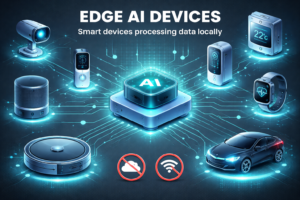
Incorporated into robotics and IoT devices, agentic AI can have a physical interaction with the environment – running machines, managing infrastructure, and helping in real-world activities.
Chatbots to Autonomous Agents.
Rule-Based Chatbots
The first AI systems were based on the pre-written scripts and rules. Although they were good at simple interactions, they were not flexible and intelligent.
Conversational AI
Natural language processing created new opportunities in interaction as AI became able to interpret the context, tone, and intent and understand them better.
AI Assistants
Assistants in the form of AI started to cope with the routine, reminders and suggestions and became part of life, both personal and work.
Agentic AI Systems (2026)
The systems of today have much more than assistance. They are independent in planning, acting and optimizing processes and therefore are powerful tools to be used in real world.
Actual uses of Agentic AI.
1. Industry-based Smart Robotics.
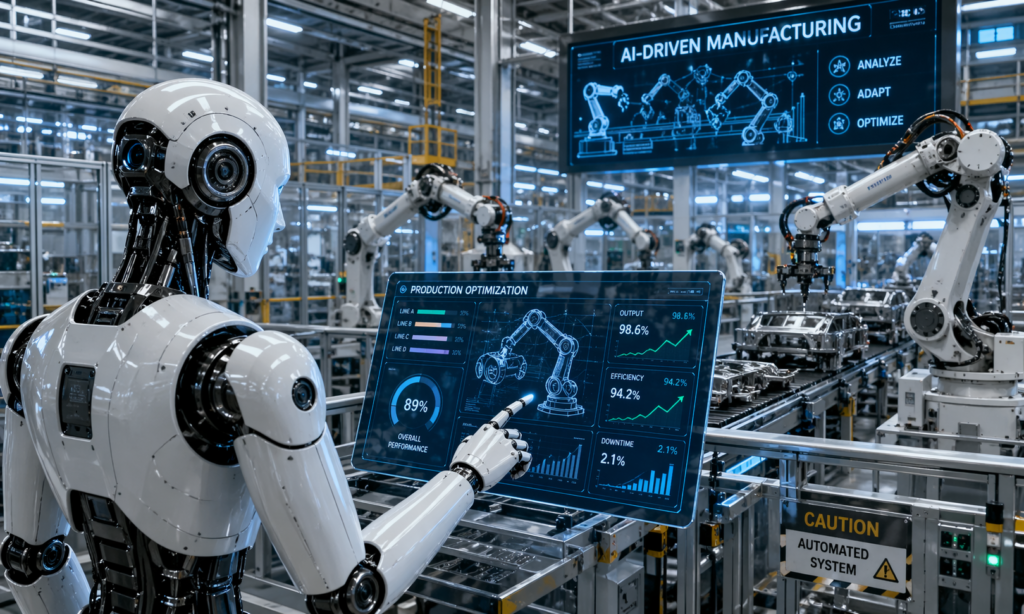
The intelligent robots used in manufacturing are changing the way things are made through the use of agentic AI that controls production lines, finds out defects, and in real time they optimize workflows. These robots are not only efficient, but also minimise risks of operation.
2. Healthcare Automation
In the healthcare sector, agentic AI supports the diagnostics and treatment planning, as well as robotic surgeries. These systems can help make decisions more quickly and accurately by the analysis of high volumes of medical data.
3. Autonomous Vehicles & Delivery
The delivery systems and self-driving cars are based on agentic AI that allows them to navigate through complicated environments, evade all sorts of challenges and allow their safe and efficient transportation.
4. Personal AI Assistants
The current AI assistants are able to work with multi-step processes, like finance management, travel, and schedule, providing a user experience that is highly personalized.
5. Smart Homes & Cities
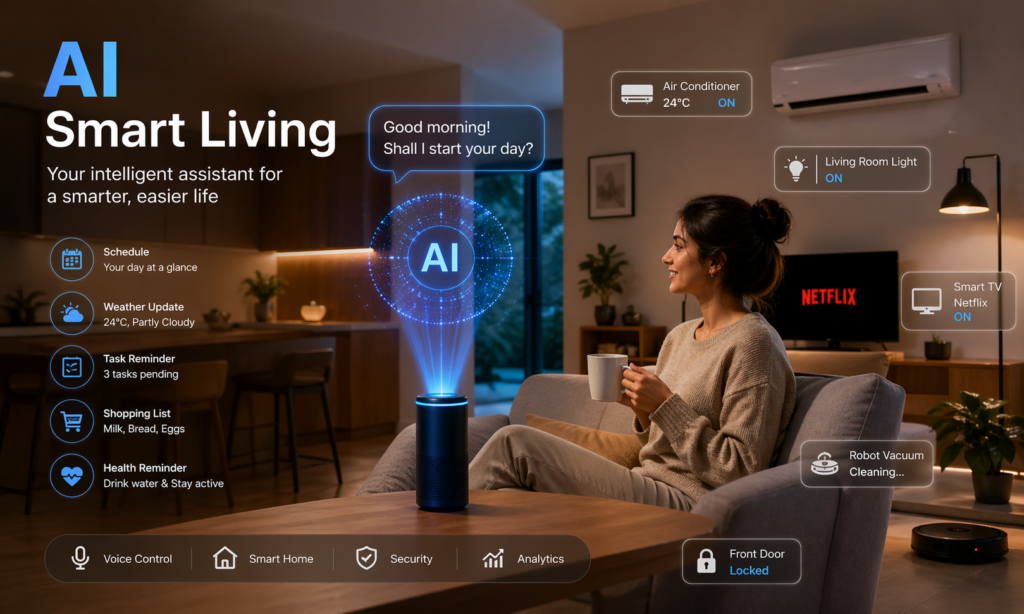
Optimizing energy consumption, improving security, and controlling infrastructure, agentic AI helps to make the living conditions of people smarter and more sustainable.
Technology of Agentic AI.
Advanced Machine Learning
Machine learning allows AI to work with large volumes of data and identify trends, as well as make predictions to take intelligent actions.
Reinforcement Learning
The agentic AI systems pick up optimal behaviors through the process of trial and error, and thus enhance their performance with time.
Large Language Models (LLMs).
These models increase their communication level, reasoning, and planning, which means that AI can comprehend these complex instructions and perform them.
Robotics Integration
Integrating AI with robotics, systems are able to respond to the physical world, and carry out physical tasks that cannot be done in the digital world.
The advantages of Agentic AI.
- Greater Productivity: Automates tedious and complicated jobs.
- Increased Accuracy: Minimizes the human error in operations that are critical.
- Cost Optimization: Reduces cost of operation and labour.
- Nonstop Performance: 24 hours 7 days a week.
- Scalable Solutions: Can be easily scaled to meet increasing needs.
Trends of Agentic AI in the Future 2026 and Beyond.
Human-AI Collaboration
The future will be built around collaboration whereby AI systems and humans will collaborate to get improved results as opposed to competing.
Autonomous Enterprises
Organizations will also turn more and more to agentic AI to run operations, interact with customers, as well as make strategic decisions with little human involvement.
The use of AI in Science.
The field of medicine, climate science, and engineering will be accelerated by agentic AI, which will be able to analyze complicated data and provide understanding quicker than humans.
Hyper-Personalization
In shopping to entertainment, AI agents will provide customized experiences according to the user behavior and preferences as well as real-time information.
Humanoid Robots: expansion.
It is in industries such as healthcare, hospitality and customer service that humanoid robots that are driven by agentic AI will be more widespread.
Conclusion
Not only is agentic AI an upgrade, but also a paradigm shift in the interactions of technology and the world. Removing the passive response systems, AI is re-industrializing, re-economizing, and redefining our lives.
The evolution of chatbots into robots underscores the advancement of technology, but also poses some crucial questions on the matter of responsibility, ethics, and the role of humans in an AI-driven society.
Frequently asked Question (FAQs)
1. How is agentic AI different from regular AI?
AI agentic would be able to operate on their own and make decisions whereas regular AI would respond to orders.
2. Is agentic AI in use in 2026?
Yes, there are industries that actively use it such as health, logistics and manufacturing industries.
3. Will agentic AI bring out the human jobs?
It can substitute the monotonous jobs but will also provide new chances that demand highly skilled employees.
4. Are agentic AI safe?
It is safe provided that it is regulated, secured and monitored in compliance to ethical rules.
5. What are the industries that are the most benefited by agentic AI?
Top adopters are healthcare, transportation, manufacturing and smart city infrastructure.